

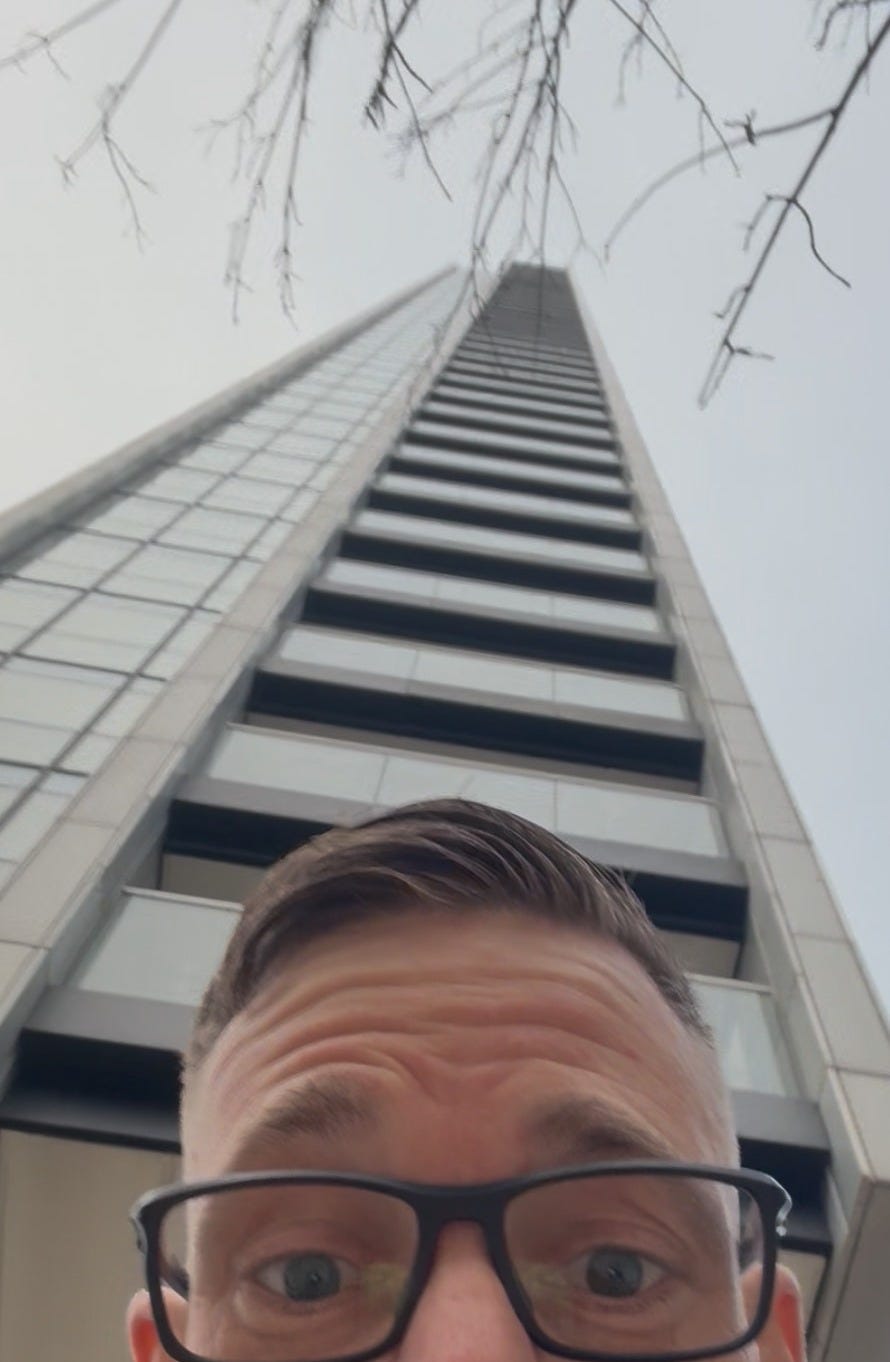
So, I’ve heard a lot of bad things lately about our great capital city—the crime, the cleanliness, and the pace—yet while reflecting on this on the train home, I couldn’t help but disagree to some extent. My time in the city was quick and directed, similar to the vibes I got from the public walking the streets: vibrant yet uniform, with the streets operating like the arterial routes recognizable in a classic ant farm. As the train made its way back up the tracks and I started to get closer to home, I almost felt relieved to be escaping the noise, while also a little gutted that I hadn’t spent more time there.
I must say that one of the only things that felt harmful while I was there was the pace. Now, I like a full life and often complain about not having the time to get things done—those who know me well enough will also claim that I’m never in a rush and my forward planning (to them) often feels rather haphazard. My mind, in my eyes, operates somewhat mechanically; this often presents challenges as it can feel like I need to observe, process, and assess almost everything I see—often with a level of scrutiny that not only sits in the subconscious but is also misunderstood by others. As you can imagine, drop that slap bang in the middle of our great capital city, and it’s almost understandable how that might malfunction.
I’ve been to the city before, yet only to see the ponies... sounds so middle class... What I mean is, as I have a love for all things equine, I have—in the past, the distant past—been to Olympia to watch the show jumping as a paying spectator, I might add. These trips have always been rather guided, and barring the one school trip to the Millennium Dome, my knowledge of the city is rather limited. In fact, I was even halted by the fact that all the road signs were Monopoly spaces, and don’t get me started on the train station—that was bigger than any airport I’ve flown out of. I admittedly struggled somewhat with following the display board as it was so bright; like a moth to a flame, I simply stared at it for ten minutes before realizing I didn’t even need to be looking at it. I had just arrived, after all, and with my return journey 24 hours later, it didn’t hold any relevance to me. Upon reflection, I think it simply offered me something fixed and understandable to focus on amid the energy and confusion offered by the thousands of commuters shuttling between the platforms.
The city itself was impressive, to be fair; there was an obvious energy unlike anything I’ve personally experienced. I know that may sound strange to some people, and yes, I’ve visited cities in the past—it’s just that I’ve never experienced a capital city, and definitely not a world hub such as London. There was one observation that I made on a rather frequent basis, and it’s actually something that perplexed me somewhat, considering everyone within the city operates with such vigorous intentions. That being: when stood at a pedestrian crossing, nobody—and I mean NOBODY—presses the button on the post, the button that I was always led to believe as a child to be the first action taken, especially if you require the traffic to stop. Needless to say, they were all lucky I was there to aid them on their journey; in fact, I felt like I was there on service to ensure people reached their destinations.
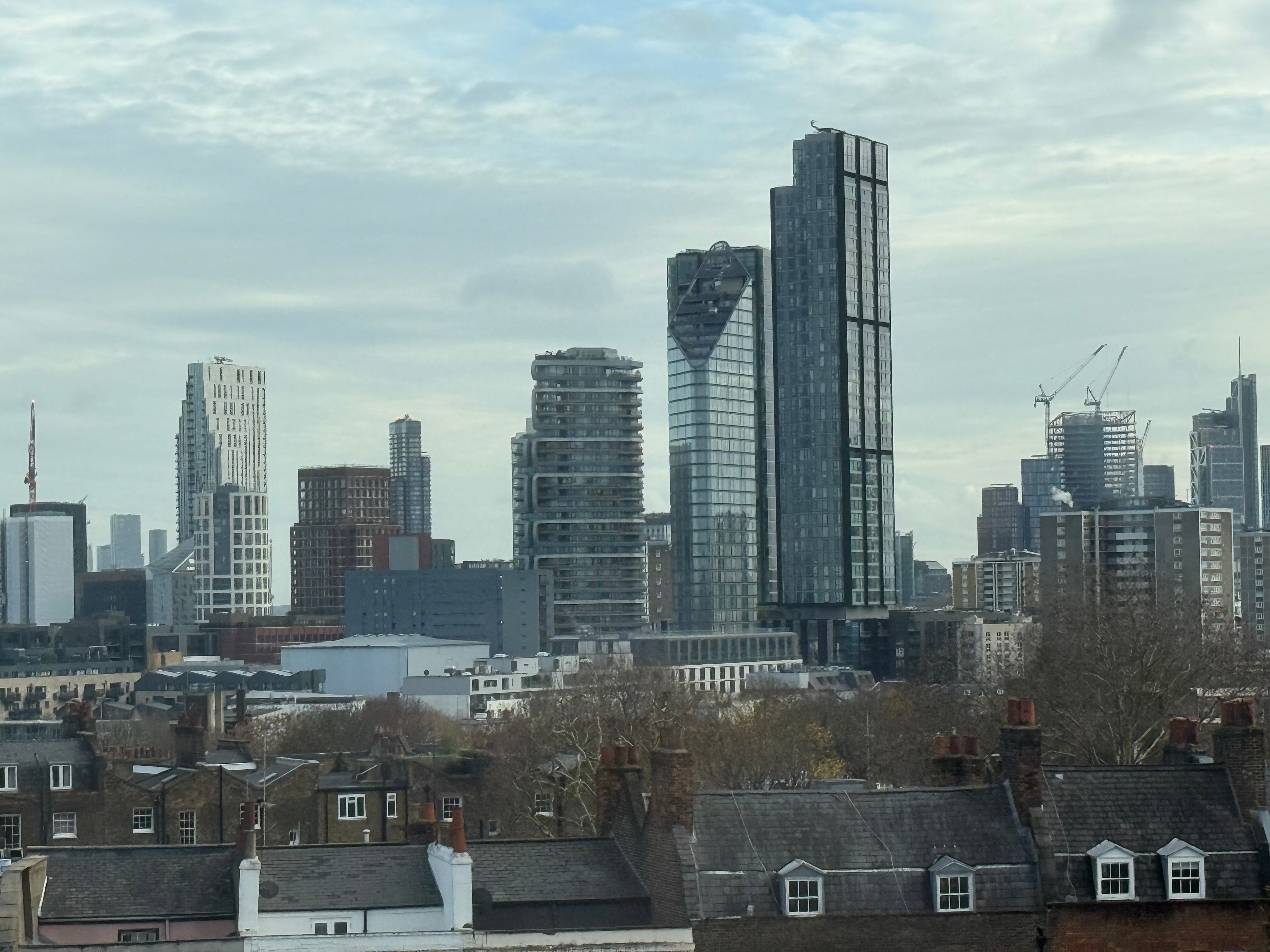
The visuals offered by the skyline were simply fantastic; my room at the hotel captured the view somewhat, as well as offering a little calm to experience it. The streets, on the other hand, I almost struggled to enjoy. I am fascinated by architecture, and where most may take the approach of assessing scale (”wow, look at how big that building is”), my mind fires up the counters on overdrive: I start processing the number of floors, try to count windows, start assessing the period in which it was developed, etc.—a task that is obviously daunting in a city like London, impossible almost. Yet tell my brain that. I found myself obsessed by the fact that there were gardens on rooftops, something I’ve only ever seen on animated building plans. I found myself fantasizing about how I would have a secret zen garden on my rooftop, and how I would watch the world move below with the comfort of knowing the madness was a choice—then I would inevitably be returned to reality as I was presented with a barrier of people all stood at a pedestrian crossing, waiting for this northern alien to press the magic button to allow them to cross.
The people themselves—the ones static long enough to engage in conversation—were nothing but an advert for the city itself. There was the obvious banter expected from the north/south divide: me there with my six toes and restricted gene pool; them with their perfect white teeth and over-stylized hair. However, barring a little bit of cultural geeing, my welcome was warm and inviting. At no point did I feel unsafe or, in fact, uncomfortable in any way (excluding the general pace). Even when navigating the city after the event in the evening, this sense of security didn’t falter; the taxis were in plenty and didn’t require a degree in computer application science to book—it was very much the old-fashioned hand-out black cab approach, whereas back home we now need fifteen different apps on the phone and a level of competence to boot.
I will say though—and this is mainly due to my own ignorance—but the disparities between the wealth distribution are crazy! And actually, if it wasn’t for the way my brain personally operates, it would quite possibly have remained hidden due to the fleeting visit. The amount of property was untenable, so to speak; I mean, the buildings touched the sky. However, take off the lens and look with an open eye, and it becomes rather evident that most of the property is not designed to suit the everyday man. A quick look in the windows of the estate agents and you witness, in my eyes, what is a very chilling reality. The cheapest family home that I could recognize started at over £1.5 million—like, I feel our family home is bigger than most in this price bracket. Then your only other option is the rental avenue, with a bedsit flat securing £550 per calendar week, a price higher than the average working weekly wage. I struggled to comprehend how the girl pouring my coffee could even survive in the city.
Truth is, they don’t—a fact made obvious by the response met with my question of the day: “What’s within thirty minutes’ walk that’s worth a look?” This question was often met by an uncomfortable laugh and a “I don’t live round here, mate, so I don’t know.” In fact, most travel over an hour to get into work! Now, I’ve commuted before, but that was by choice, in order to secure a higher-paying role or to appease a client, etc. When I think of my days filling the more recognized job roles—farm work, retail, bar work, kitchen porter, factory work, etc., all roles I’ve filled over the years—these have all been within a short drive of the village, and a two-minute walk when I resided in the local town. The idea of adding two more hours on top of a working day, just to simply make do, scares me a little bit. I cannot help but think that this not only adds pressure but also steals the life from under these poor individuals—that’s two hours that could be spent developing their relationships, themselves, and even their community.
The wealth divide was somewhat nauseating at times, and even though I was there as a tourist with all the time in the world, simply meandering the streets (on my mission to ease the plight of the commuter against the pedestrian crossing), I felt myself somewhat more aligned with the regular man, so to speak. Yes, I stopped to pay a little too much for my coffee, and yes, my hotel room was on the other side of the budget; however, this for me was something I had been saving for, and I honestly was considering it a little treat for myself. On the other hand, when you consider the average coffee was £6 and couple that with a little slice of cake, you’re closer to £12–£15—it’s hard for me to comprehend how this could impact the decision to just nip out to grab some lunch whilst putting a shift in.
Now, admittedly, that is a very brief summary—as in very brief. And somewhat naïve one! There will obviously be harder struggles felt by the people, and it would be wrong for me to think that I could understand them, but one thing I will say is that if they were present, I couldn’t recognize them in the attitudes of the people. In fact, the “people” of the city were infectious; there was a warmth that is echoed in the northern stereotype that we place on the cockney geezer—like you could talk me into buying anything (but a used car). It’s this attitude that led me to buy a bloody Christmas tree with no way of returning it home.
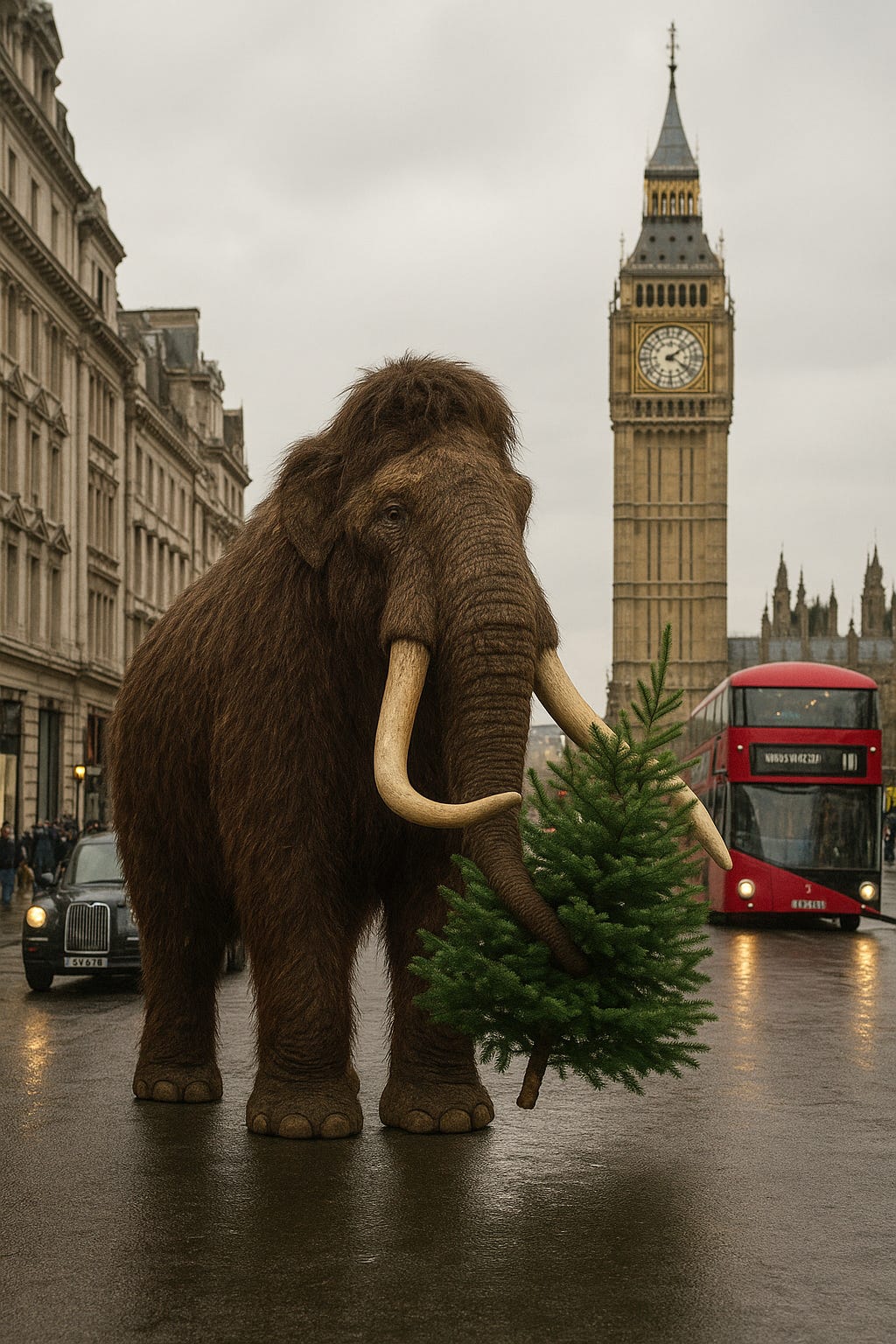
It would be unfair for me to say it was predominantly my sympathies to the working man (or woman, as we still need to be careful what we say), or in fact my own ideas of giving something back to the great city that led me to buy the tree, as this takes away from the wonderful sales pitch offered by the young lad selling the trees. Oliver was engaging and energizing; his pitch was spot on, and with his grandfather in support showing him the ropes, it was hard to walk away. What was surprisingly harder, though, was actually finding the tree a new home. Once again, the fast pace took over, and people seemed a little too preoccupied—and honestly rather concerned—when a random northern lad was trying to give them a Christmas tree. In fact, people kept looking for the cameras and asking if I was famous. Strangely, I feel that if I had said yes, they would have taken the tree… but when it comes from a genuine place of love… they feel suspicious about the whole thing—why is that?
Returning back to Liverpool on the train was a welcome relief; this not only meant that I had successfully navigated the train station’s mega display boards (I imagine these to be the same size as the advertising boards familiar to me from the TV shots of Times Square), but also that I was within a daily commute’s distance to home. I landed slap bang in the middle of the Christmas markets, and strangely the city seemed quiet to me—now, I’m a city slicker and all that. It was strange to see the big concrete blocks had been placed to encase the markets for public safety, a regular feature in a European event these days (that’s a post in itself), although reassuring to see the city taking care of the attendees. My walk back to the sister station to catch the train back to my little stand was littered with vendors, all fighting for the chance to sell you the bag of doughnuts or chocolate-covered churros. Indulging in a bag of churros to settle the slight rumble that had started to build from my afternoon’s travel, I couldn’t help but return to my thoughts on the ideas of division. The buildings in Liverpool are grand in stature all by themselves, and I have even picked the office I would like when I reach a level that allows, yet for me this would involve a daily commute that would top two hours. I laughed at the level of irony that offered—there’s me amazed at how these people are forced to make a commute to work, yet here I am fantasizing about success and measuring that by inducing the same conditions that I placed concern into for others. I laughed at my own arrogance somewhat, then was slapped right back into reality by the world upon realizing that the wealth divide in my own local city was more prevalent than that of the capital.
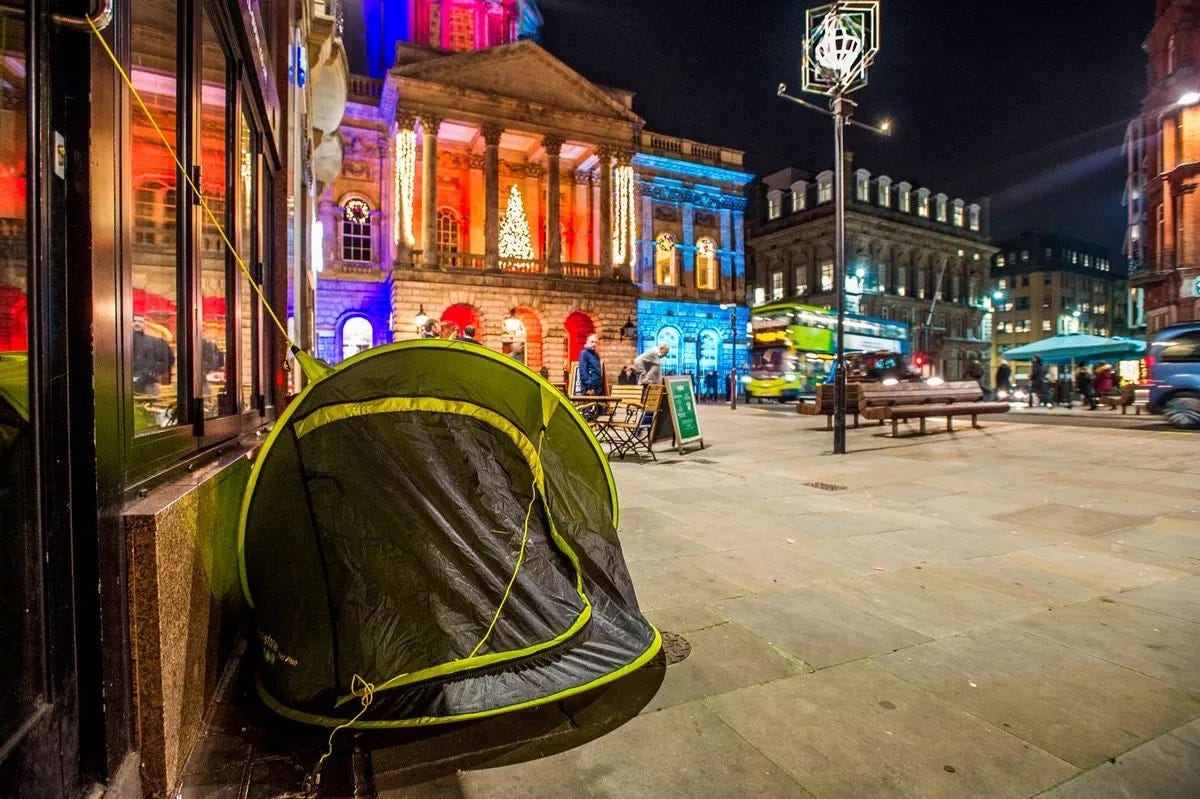
I saw something that I have never witnessed before: tents, like literal tents, lining the main shopping streets of the city. When I say lining the streets, these weren’t even pitched up in the doorways of closed retail units—these were literally on the pavements of the main shopping arteries, and there were plenty of them… My guilt kicked in, and I started to think about how the cost of the tree could have fed a whole heap of the homeless men and women of my own town. I then started thinking about the cost of my 36 hours in the city and thought how that would have helped even more.
In the end, my little adventure as a mammoth in the city left me with more questions than answers. London’s chaos and charm are undeniable, but peeling back the layers reveals struggles that echo everywhere—even closer to home than I’d like to admit. It’s easy to point fingers at the big smoke, but maybe the real lesson is looking in our own backyard. Next time I head south, I’ll pack lighter, press fewer buttons, and perhaps find a way to give back that doesn’t involve lugging a Christmas tree. Until then, I’ll cherish the memories, the banter, and that fleeting sense of being part of something massive—flaws and all.