

When the World Pulls Us Away From Ourselves
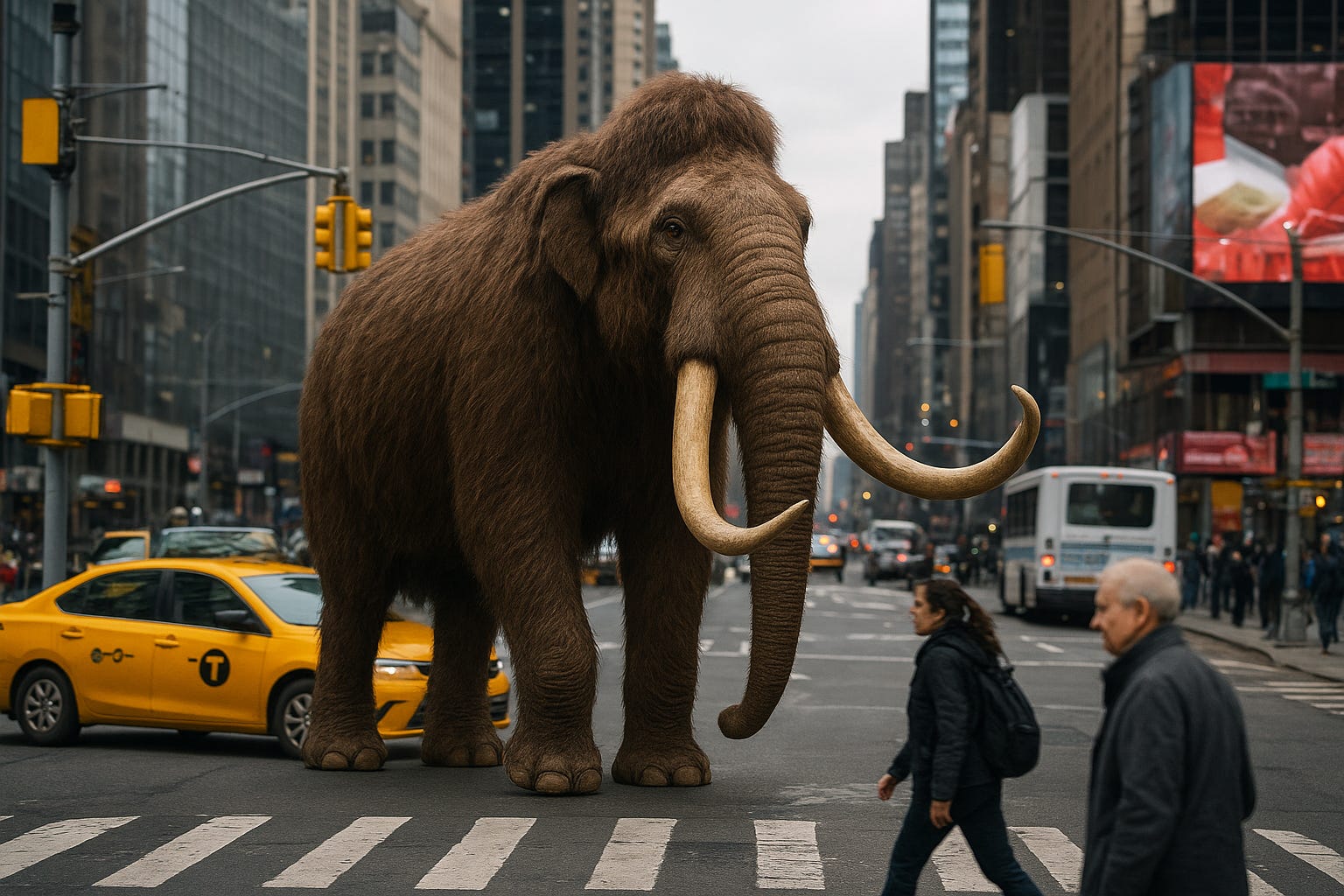
Distraction is one of the oldest human strategies for coping with discomfort. For as long as we’ve been conscious, we’ve used our attention as a shield—turning away from pain, boredom, uncertainty, or emotion.
When considering the modern world, distraction has evolved from a momentary escape into a constant environment.
It no longer waits for us; it seeks us out.
Some distractions soothe. Some numb. Some connect us to the world; others take us out of ourselves.
And somewhere in the middle sits a quiet psychological truth: distraction isn’t the enemy — unconscious distraction is.
The Psychology of Turning Away
In person-centred therapy, distraction can be understood as a response to incongruence: the gap between who we are and who we feel we should be.
When that gap aches, distraction becomes a buffer.
🦣. Sometimes it’s a relief — a walk, a game, a moment of daydreaming.
❌ Sometimes it’s avoidance — scrolling, noise, busywork that keeps us from hearing our own inner signal.
As Carl Rogers noted, we move toward experiences that feel safe to process and away from those that don’t. Distraction is one of the ways we negotiate that safety.
From a social-psychological perspective, this becomes even clearer. Humans have always been shaped by attentional norms: what tribes, families, workplaces and cultures tell us we should care about.
Our digital world has amplified this dramatically — shifting from social influence to algorithmic influence.
The Science of Attention: A Brain Built for Survival, Not Smartphones
Neuroscience frames attention as a limited resource. Our prefrontal cortex — the part responsible for focus, planning, self-regulation — fatigues quickly.
Meanwhile, deeper systems like the amygdala and the dopaminergic pathways are always scanning for novelty, reward, and threat.
This creates a perfect storm:
• Dopamine drives the urge to “check”, rewarding tiny hits of novelty — notifications, messages, updates.
• Cortisol spikes when we fear missing something important, increasing compulsive checking.
• Attentional residue builds up when we switch tasks repeatedly, lowering cognitive performance and heightening anxiety.
• The Default Mode Network activates when attention slips, pulling us into self-referential thoughts — often rumination.
Distraction, in this light, isn’t a character flaw. It’s neurobiology meeting modern design.
How Algorithms Lock Us In
Modern platforms don’t just offer distraction; they engineer it.
Algorithms track micro-behaviours — dwell time, scroll speed, the videos we watch to the end — and feed us what is most likely to keep us returning.
Not what aligns with our wellbeing. Not what aligns with our values. Simply what maximises engagement.
This creates three key psychological traps:
1. The Attention Loop
You check → you scroll → the algorithm learns → it feeds you more → you check again.
Over time, this shapes what feels interesting, not just what is.
2. The Emotional Hijack
Content with strong emotional charge — outrage, surprise, fear — spreads fastest.
The algorithm therefore amplifies what is dysregulating, not grounding.
3. The Identity Drift
When attention is constantly externally guided, internal signals weaken. We lose touch with:
• what we enjoy
• what we value
• what actually restores us
This is why many people feel more drained after distraction than before.
In psychotherapy terms, algorithms can widen the gap between the organismic self (our inner, natural direction) and the introjected self (who we think we should be).
Healthy vs Unhealthy Distraction: A Person-Centred View
Healthy Distractions
These help the nervous system reset, integrate, or decompress. They:
• restore emotional balance
• reduce stress
• offer spaciousness
• reconnect us to body or environment
Examples: a walk, reading fiction, music, gardening, creating, mindful screen use, intentional play.
Unhealthy Distractions
These pull us away from emotional processing or reinforce avoidance. They:
• numb or suppress
• increase agitation
• disconnect us from our felt sense
• create compulsive cycles
Examples: endless scrolling, “doom loops,” multitasking as avoidance, noise saturation, gambling apps, algorithmic rabbit holes.
The difference is not in the activity. It’s in whether it supports or suppresses our real needs.
A Modern Example: The Evening Spiral.
You sit down after a long day, phone in hand.
You tell yourself it’s a five-minute scroll.
Forty minutes later, you look up — your chest a little tight, your mind a little scattered, your energy strangely lower. You can’t recall half of what you saw.
This isn’t failure!
This is a system optimised to override your intention.
But here’s the important part:
You can’t heal by shaming the part of you that reached for distraction.
You can only heal by understanding what it was trying to protect.
